
Close Menu
 

Home » Portfolio » Community of Practice – Three Horizons Framework

Three Horizons Community of Practice

After training to become a Three Horizons Practitioner in 2025, I’ve loved being a part of the wider community of practice that meets every month thanks to the custodians at Future Stewards – who are all wonderful!

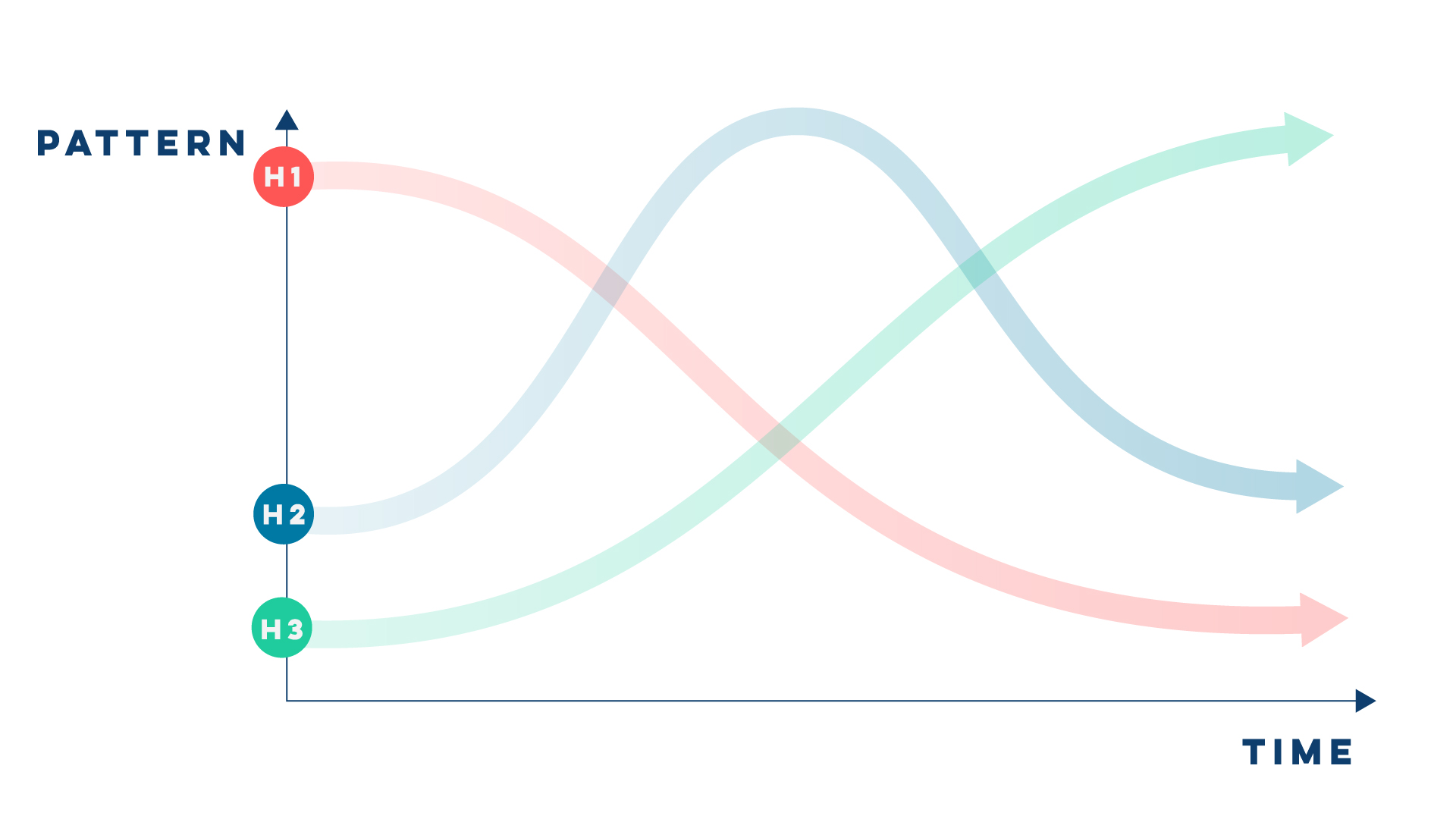
The Three Horizons Framework is a simple yet powerful tool used to facilitate conversations about the future. The framework brings together diverse perspectives and creates a shared language for discussing present challenges and emerging opportunities. It’s particularly useful in guiding groups towards meaningful action in complex environments, making it applicable across business, policy, and community contexts. 

Each month, we meet to test Three Horizons ideas/processes with each other, collaborate and unpack our 3H usage in different worldwide contexts, explore best practice as well as complementary approaches.

If you want to learn more about their work, this eight-part conversation series between futures practitioner Bill Sharpe, and his friend, Yasu Mali, helps you become your own futures practitioner, equipping you with the knowledge and practices to begin shaping the world around you, it’s a great listen and I hope you enjoy listening as much as I have.

 
This website uses cookies
This site uses cookies to enhance your browsing experience. We use necessary cookies to make sure that our website works. We’d also like to set analytics cookies that help us make improvements by measuring how you use the site. By clicking “Allow All”, you agree to the storing of cookies on your device to enhance site navigation, analyse site usage, and assist in our marketing efforts.
These cookies are required for basic functionalities such as accessing secure areas of the website, remembering previous actions and facilitating the proper display of the website. Necessary cookies are often exempt from requiring user consent as they do not collect personal data and are crucial for the website to perform its core functions.
A “preferences” cookie is used to remember user preferences and settings on a website. These cookies enhance the user experience by allowing the website to remember choices such as language preferences, font size, layout customization, and other similar settings. Preference cookies are not strictly necessary for the basic functioning of the website but contribute to a more personalised and convenient browsing experience for users.
A “statistics” cookie typically refers to cookies that are used to collect anonymous data about how visitors interact with a website. These cookies help website owners understand how users navigate their site, which pages are most frequently visited, how long users spend on each page, and similar metrics. The data collected by statistics cookies is aggregated and anonymized, meaning it does not contain personally identifiable information (PII).
Marketing cookies are used to track user behaviour across websites, allowing advertisers to deliver targeted advertisements based on the user’s interests and preferences. These cookies collect data such as browsing history and interactions with ads to create user profiles. While essential for effective online advertising, obtaining user consent is crucial to comply with privacy regulations.